Moral Panic: A 2,400‑Year‑Old Script
Writing was going to cost us our memory. Novels, our judgment. The telegraph, our nerves. Is artificial intelligence another moral panic, or the first time the fear arrives in time?
Every time we invent something, someone announces the end of the world. The world never ended, but it was never the same again.
I realized something early on that sounds like a cliché but has held true for me: the only way to really understand a problem of today is to go and look at history. I’ve seen it with economics and with technology. When I see what a problem looked like a hundred or two hundred years ago, I understand today’s version better.
That’s why one of my favorite podcasts is Founders, where David Senra tells the lives of history’s great founders. I listen to it constantly.
This year, Senra interviewed Marc Andreessen, co-creator of the browsers through which many people saw the internet for the first time, and today one of the most influential investors in Silicon Valley. Early in the conversation, Senra tells him something that stuck with me: “You have this encyclopedic knowledge of the history of Silicon Valley in your head.” I think that’s why Andreessen sees what others don’t. If you know history, you recognize the patterns when they come back.
An hour and ten minutes in, almost in passing, he described one:
Every new technology is greeted with what they call a “moral panic.” […] It’s going to ruin everything. Specifically, it’s going to ruin society, it’s going to ruin morality, and then, especially, it’s going to ruin the children.1
I liked the line so much that I went to check it. I did what I always do: I went and looked at history.
I found a friar furious at the printing press. A German convinced that reading novels gave you gas. A senator repeating a false statistic about pornography out loud. And, above all, I found a script.
This essay tells that script through five moments in history. It doesn’t offer a verdict. It offers a way to think through the question I really care about: whether what we feel about artificial intelligence today is another chapter of the same story, or whether, this time, the fear is right.
What a moral panic is
The phrase isn’t Andreessen’s. It comes from sociology: Stanley Cohen made it famous in 1972, with a book about an Easter weekend in Clacton, an English seaside resort.2
Truth be told, not much happened in Clacton. It was the coldest Easter Sunday in eighty years, and the town was full of bored young people from two tribes: the mods, who dressed sharp and rode scooters, and the rockers, with leather jackets and motorbikes. There were a few fights. Windows were broken, some beach huts were wrecked and a boy fired a starting pistol into the air. Total damage: £513.
The next day, the Daily Telegraph’s headline read: “Day of Terror by Scooter Groups.” The scooter made it into the headline, but nobody was afraid of a machine. They were afraid of the young.
Cohen spent years studying how one cold Sunday became a national threat. And he described the script these episodes tend to follow, in five steps:
- The threat. Something new appears and someone declares it a danger to society’s values.
- The exaggeration. The press tells the story in an inflated, stereotyped version.
- The crusade. Editors, bishops, politicians and other “right-thinking people” rise to defend morality.
- The experts. They arrive with their diagnosis and their remedy.
- The forgetting. One day the issue disappears, or sinks out of sight until the next time.
That’s the script in the title. Cohen described it for a few gangs on an English beach, but it fits new inventions surprisingly well. In the five moments that follow, the era, the machine and the characters change. Not every step always shows up: the panic over writing stops at the first one, and others skip a step or two. But they repeat often enough to be recognizable, and I’ll point them out as we go.
370 BC — Writing will make you forget
One of the oldest panics we know of was against writing. We know about it, of course, because someone wrote it down.
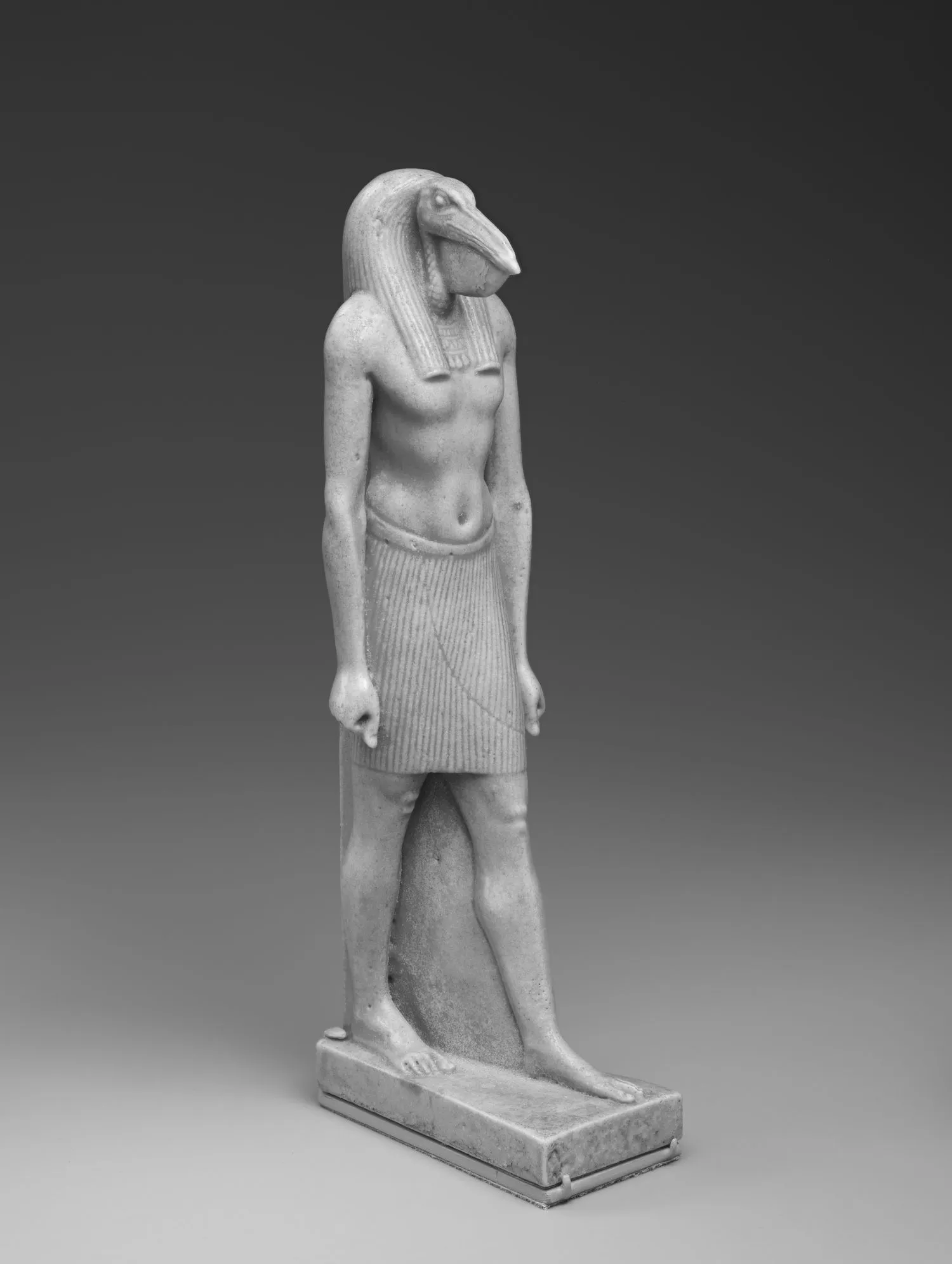
In the Phaedrus, Plato has Socrates tell a myth. The Egyptian god Theuth brings King Thamus an invention, letters, and pitches it like this: “This invention, O king, will make the Egyptians wiser and will improve their memories; for it is an elixir of memory and wisdom that I have discovered.” The king replies:
For this invention will produce forgetfulness in the minds of those who learn to use it, because they will not practice their memory. […] You have invented an elixir not of memory, but of reminding; and you offer your pupils the appearance of wisdom, not true wisdom.3
Swap letters for artificial intelligence and it’s this week’s headline.
Notice the word they both use, the one translated here as elixir. In Greek it’s phármakon, which means remedy, but also poison. Theuth sees a remedy; Thamus, a poison. The same word serves them both.
The one telling this myth, though, is Socrates. And when he finishes, he adds a complaint of his own, subtler than the king’s. Written words, he says, are like paintings: they seem alive, but if you ask them something, “they preserve a solemn silence.” The problem isn’t just that we forget. It’s that a book doesn’t answer you: it always says the same thing.
Make a note of that complaint. We’ll come back to it at the end.
Was Thamus right? Partly. We stopped memorizing the way we used to. What he didn’t see was everything we would get in exchange, starting with the very dialogue he appears in.
Of the script, only one step is here: the threat. We don’t know what people were saying in the agora; almost everything we know about this fear, Plato wrote. But it already had the shape it would keep for twenty-four centuries: the new thing is going to make us dumber.
1474 — The printing press is a prostitute
Almost two thousand years later, the fear changed shape. It was no longer forgetting. It was drowning.
Gutenberg had printed his Bible around 1455. Twenty years later, Venice was already one of the capitals of printing, and books, which until then had been copied by hand one at a time, began coming out by the hundreds.
Not everyone was pleased. The ones with the most to lose were the scribes. In 1472, the scribes of Genoa wrote to their city’s government. They didn’t ask for printing to be banned. They asked that only they be allowed to make the books that sold best: prayer books and schoolbooks.
They gave several reasons, and three sound strikingly current. First: the printers were foreigners, they wouldn’t pay taxes, and Genoa’s money would end up in German hands. Second: reading a printed book was reading passively, because real learning came from copying by hand. Third: with the printing press, nobody would ever know how to write well again.4
In Venice, a friar went much further. Filippo de Strata, a Dominican, addressed a furious poem against the printers to the doge. According to him, they sold books for next to nothing. They put scribes like him out of work. Now even asses were taking up study. And worst of all, they printed lewd texts that corrupted boys and girls. Then he launched the crusade: he called for a law banishing printing from the city. And he summed it all up in a single line:
Est virgo hec penna: meretrix est stampificata.
The pen is a virgin; the printing press, a prostitute.5 A book copied by hand belonged to a few. A printed one went home with anyone who paid.
The friar lost. Books kept coming, faster and faster, and half a century later the flood had a name. Between 1520 and 1526, more than six million copies of pamphlets were printed in the German lands, and one edition in five bore the name of a single man: Martin Luther.6
With the flood came the experts, and with them the fear of drowning. In 1545, the Swiss physician Conrad Gessner, who was trying to draw up a list of every book in the world, diagnosed that “confusing and harmful abundance of books.” His remedy was to cut it down and keep, in each subject, only the best.7
Five hundred years before the endless feed we’ve grown so used to, we were already drowning.
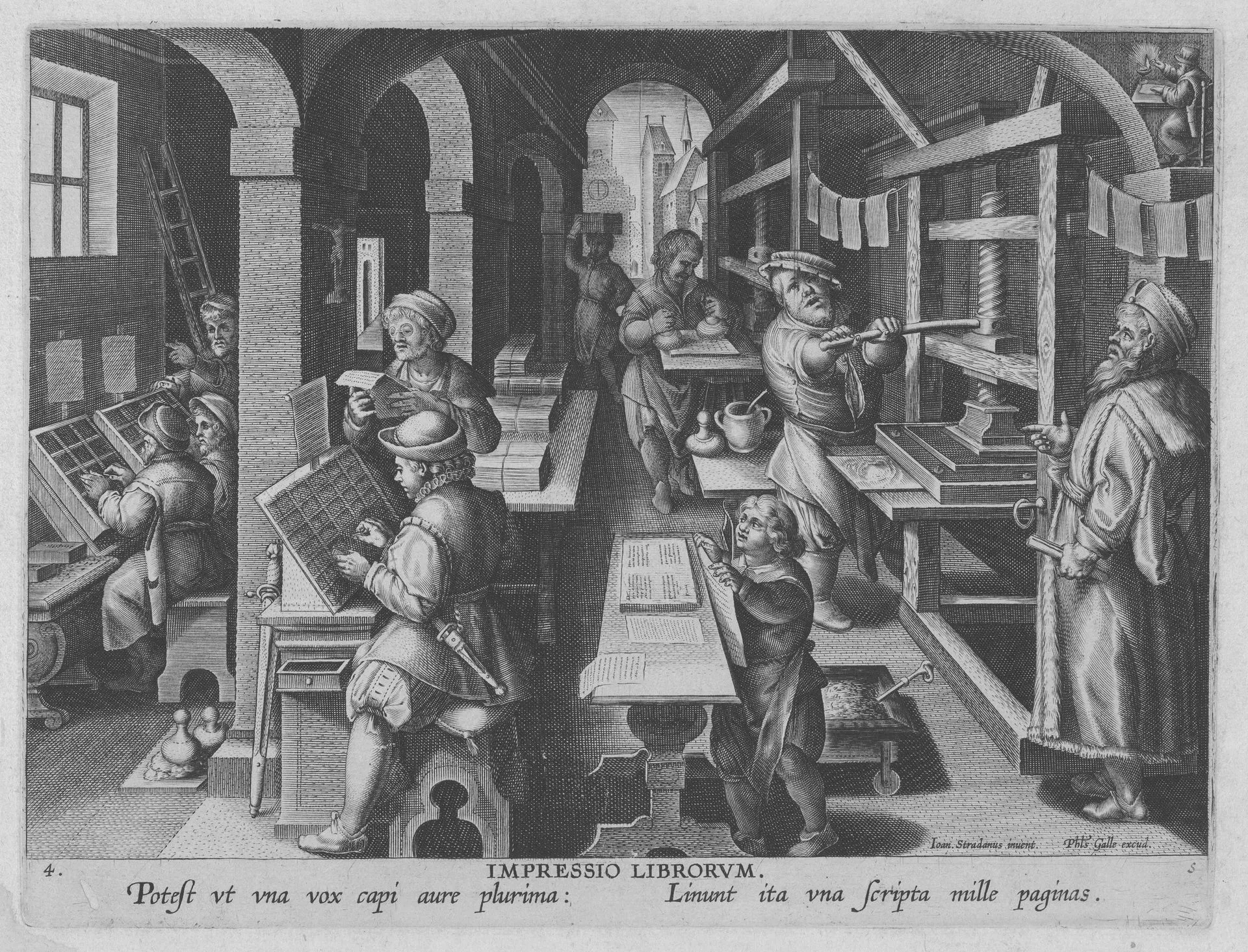
The fear turned out to be right, though not about what it feared. The press didn’t corrupt the boys and girls. It helped split Christendom in two.
1797 — Novels are poison
With so many books going around, the fear changed again. It was no longer the quantity. It was one kind of book: the novel.
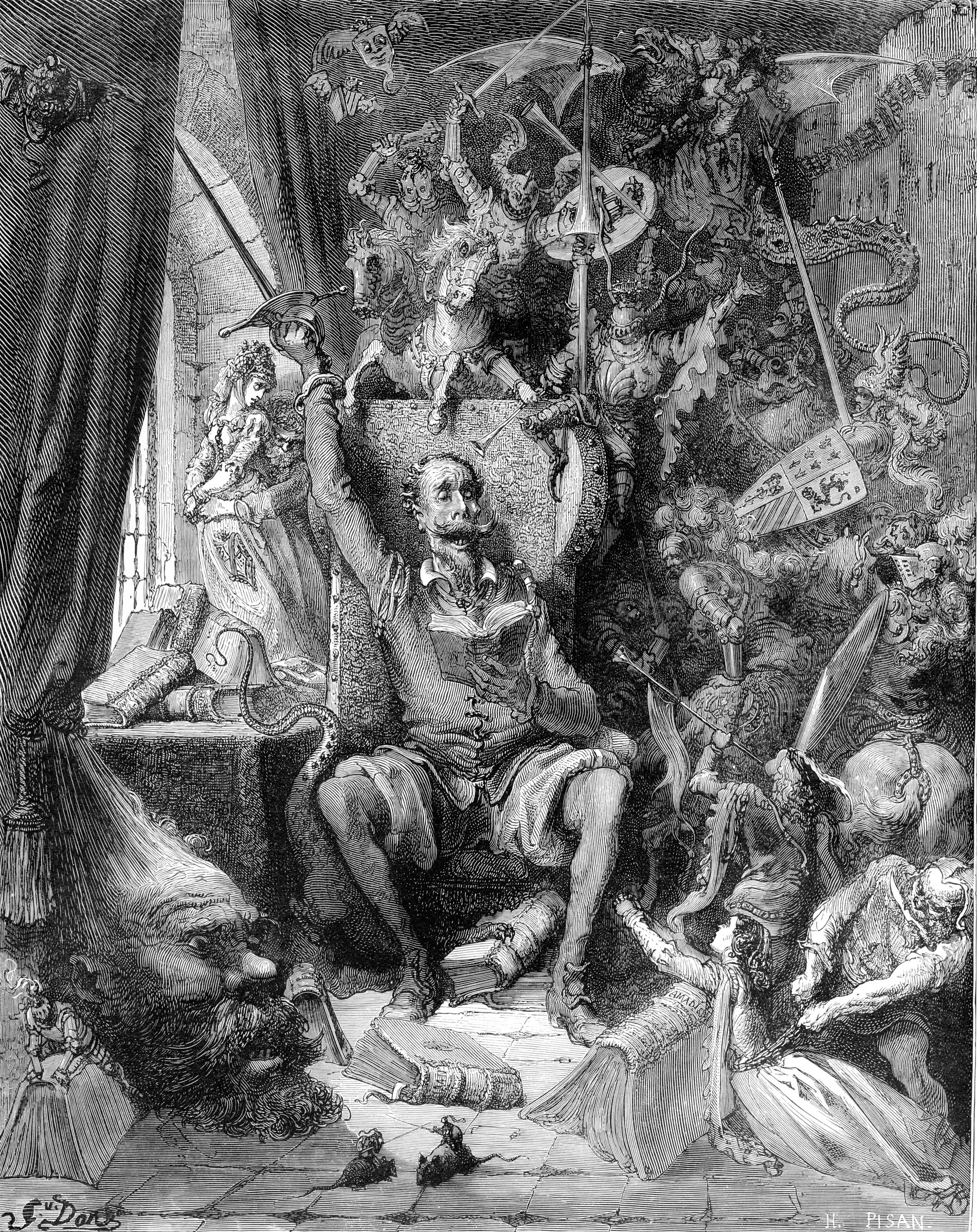
Cervantes had laughed at that fear back in 1605. As for Don Quixote, “what with little sleep and much reading his brains got so dry that he lost his wits.” It was a joke. Almost two centuries later, Europe took it seriously.8
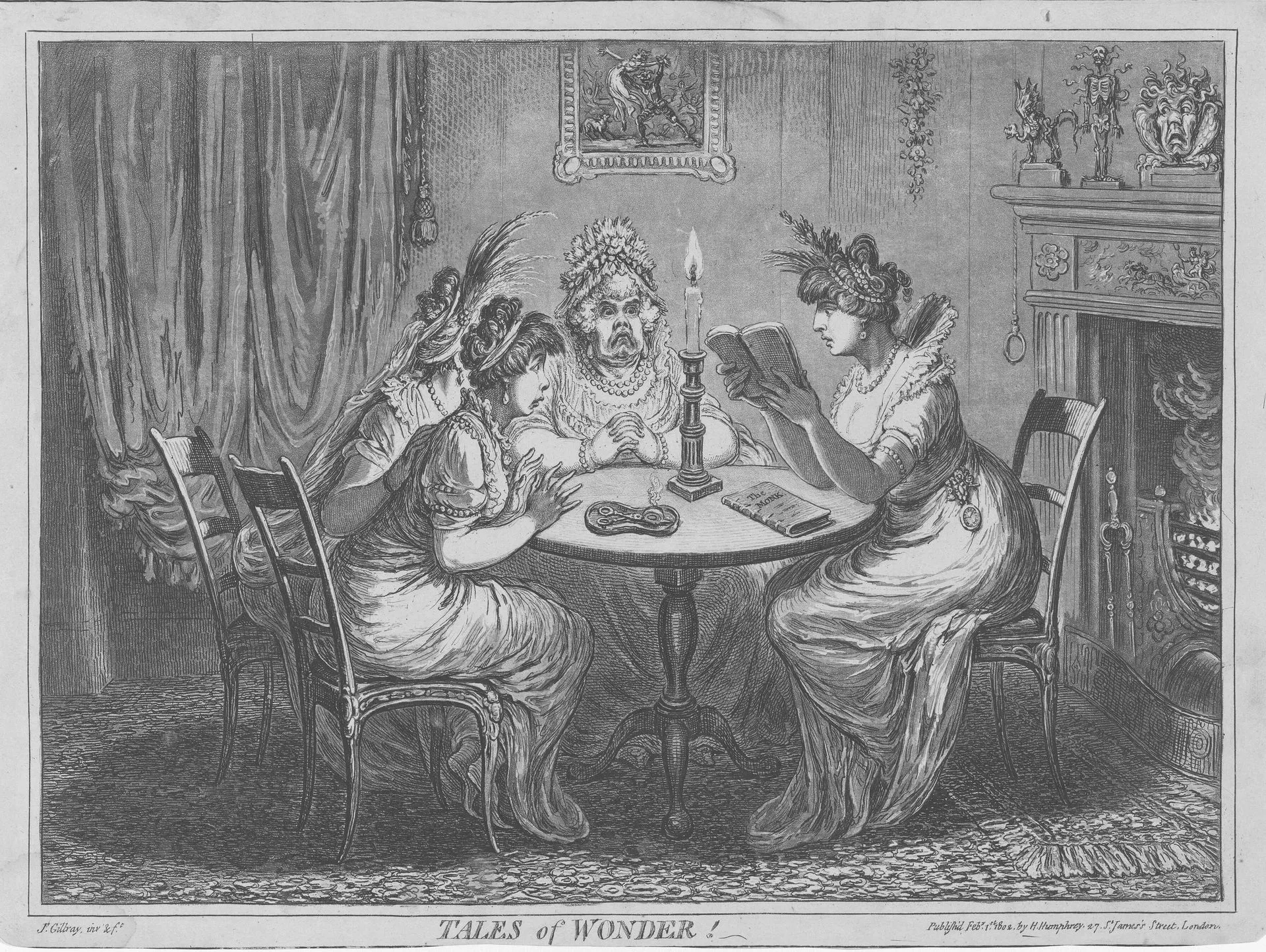
By the late eighteenth century, novels were the great entertainment of the age, and reading them began to look like a disease. The experts gave it a name: Lesesucht, reading addiction. One theologian declared it as contagious as yellow fever. And a certain Karl Bauer described its physical symptoms in 1791: the posture and lack of movement while reading, combined with violent emotions, produced flabbiness, phlegm, flatulence and constipation.9
Reading, seriously, gave you gas.
The exaggeration came down hardest on women readers. In 1797, a London magazine ran an article titled “Novel Reading, a Cause of Female Depravity.” Without “this poison instilled, as it were, into the blood,” it argued, “females in ordinary life would never have been so much the slaves of vice.”10 Twenty years later, Thomas Jefferson was asked how girls should be educated, and he answered with the same word: the passion for novels was a “poison” that left “a bloated imagination” and “sickly judgment.”11
The most extreme case involved a single novel. In 1774, a twenty-five-year-old Goethe published The Sorrows of Young Werther, the story of a young man who kills himself for love. It was a huge hit, the kind we would now call viral. And the crusade began at once: in January 1775, Leipzig banned its sale. The theology faculty had declared it “an apology for and recommendation of suicide,” all the more dangerous for being written “in a clever and captivating style.”12
There is no reliable record of a single suicide caused by Werther. What novels did do was something else. The historian Lynn Hunt argues that, by putting you inside the head of someone of another class and another sex for hundreds of pages, they taught you to feel what someone else feels. And that this new empathy helped invent human rights.13
The poison, once again, was also a remedy.
Then came the forgetting. Today nobody talks about Lesesucht, and schools make students read novels.
1881 — The telegraph will wreck your nerves
Until then, the written word had traveled at the speed of a horse or a ship. In 1844, Samuel Morse sent a Bible verse down a wire from Washington to Baltimore: “What hath God wrought!” The invention’s name says it all: in Greek, telegraph means writing at a distance.14
And with it, the fear changed. It was no longer what we read. It was how fast it arrived.
Henry David Thoreau, the American writer who went to live for two years in a cabin in the woods to keep only the essentials, distrusted all that hurry. “We are in great haste to construct a magnetic telegraph from Maine to Texas,” he wrote in 1854, “but Maine and Texas, it may be, have nothing important to communicate.” As if “the main object were to talk fast and not to talk sensibly.” And if the cable ever crossed the Atlantic, the first news might well be that “the Princess Adelaide has the whooping cough.”15
Four years later, it did. In August 1858, Europe and America exchanged their first messages.16
The exaggeration arrived three days later. The New York Times’s Washington correspondent wrote that the telegraph, through the newspapers, had caused “vast injury” to the mind and morals of the people. Telegraphic news was necessarily “superficial, sudden, unsifted, too fast for the truth.” And he couldn’t see the point: “Ten days bring us the mails from Europe. What need is there for the scraps of news in ten minutes?”17
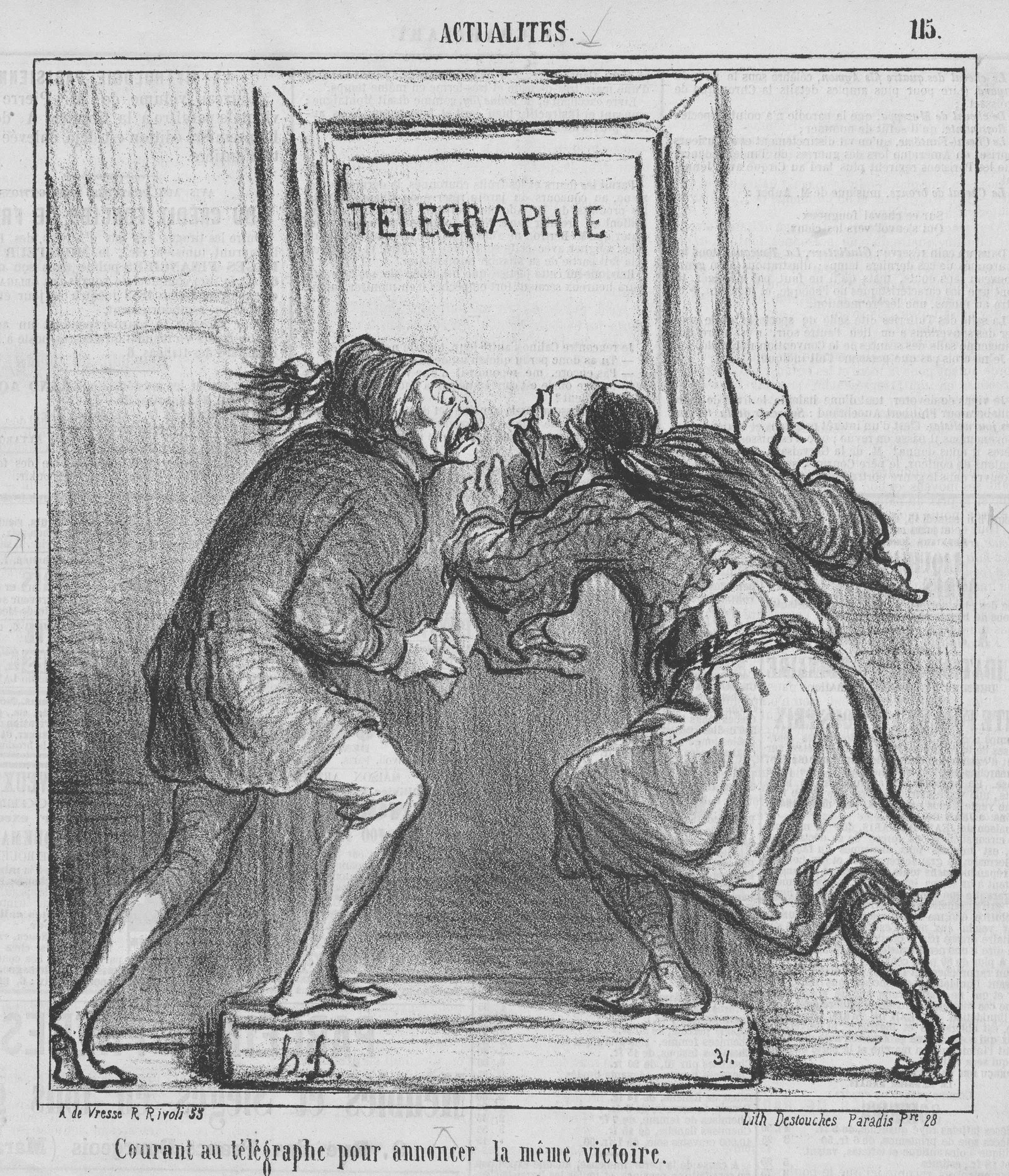
The experts arrived with a diagnosis. In 1881, the neurologist George Beard published American Nervousness, a book about the epidemic of nervous exhaustion he himself had popularized under the name neurasthenia. Among the culprits he listed the telegraph: “a cause of nervousness the potency of which is little understood.” Before Morse, merchants had been far less worried. Now any price cut in the smallest city in the West was known across the whole country in less than an hour.18
Then came the forgetting. In 1980, American psychiatrists dropped neurasthenia from their manual. Today we watch prices all over the world change on our phones, second by second, and it occurs to no one to call it neurasthenia.19
1995 — The internet is porn (and also pure hype)
With the internet, the fear changed again. It was no longer how fast the written word arrived. It was that anything could arrive, from anyone, straight into the home.
Andreessen lived through it from the inside: in those years he was building one of the first web browsers. In the mid-nineties, he recalls, the internet was scary. Nobody was going to put their credit card online, and using your real name was guaranteed identity theft. But the biggest fear was something else: what children might find.
The exaggeration made the cover. On July 3, 1995, TIME put a horrified child in front of a screen and, in enormous letters, CYBERPORN. Below it, a question: “Can we protect our kids—and free speech?”
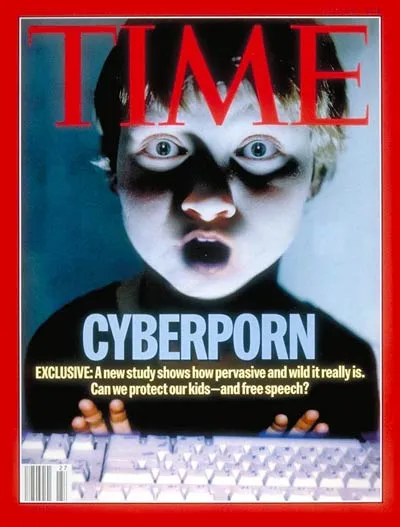
Inside, the magazine cited a study by a Carnegie Mellon University student: 83.5% of the images on Usenet, the internet forums of the day, were pornographic. And the crusade filled up with politicians. Senator Chuck Grassley took the figure to the Senate floor. “I want to repeat that,” he said. And he did.
The number was false, and this time the experts worked against the panic. Two researchers at Vanderbilt University showed that almost all that material wasn’t on the internet: it came from private, paid adult services that people dialed into by phone. On Usenet there were barely 2,830 pornographic images. Three weeks later, the journalist who wrote the story admitted it on a forum in three words: “I screwed up.”20
But the panic was already on its way to becoming law. In February 1996, Bill Clinton signed the Communications Decency Act, which made sending “indecent” material to minors over the internet a crime punishable by prison. The concern was legitimate: nobody wants a child to stumble onto pornography. But the law was so broad that it censored adults too, and the following year the Supreme Court struck that part down. Protecting children was a legitimate goal, it said, but not at the cost of everyone’s freedom of speech. The debate is still open: in 2025, the same Court allowed Texas to require age verification for pornographic sites.
And here comes the irony. One section of that same law survived, Section 230, which says platforms aren’t liable for what their users post. Social media was built on that sentence. A law meant to control what came into the home ended up protecting those who bring it in.21
The panic also came in two opposite versions. For some, the internet was extremely dangerous. For others, it was a fad that would pass. In February 1995, the astronomer Clifford Stoll wrote in Newsweek that the internet was pure hype: “Baloney. […] The truth is no online database will replace your daily newspaper.”22
In other words, the internet was going to destroy childhood and, at the same time, change nothing. Both couldn’t be true. With artificial intelligence, as we’ll see, exactly the same thing is happening.
Then came the forgetting. The credit card nobody dared put online in 1995, we now type into any website, along with our real name. And nobody would say the internet is porn. Or that it’s pure hype.
Why the script repeats itself
Writing, the printing press, novels, the telegraph, the internet. The era, the machine and the characters change, but the script repeats itself, with more steps or fewer: someone sounds the alarm, the press inflates it, the crusaders rise to defend morality, the experts arrive with their diagnosis and, one day, we forget.
The obvious question is why. If every generation has already watched the one before it exaggerate, why does it fall for the same thing again?
Andreessen has a cynical answer, and it points to the second step: exaggeration sells. “Whatever’s happening is horrible and awful, and it’s going to kill everything. Be sure to buy our newspaper tomorrow.” TIME’s cover with the horrified child is exactly that.
And he has an even more famous case on his side. On the night of October 30, 1938, a twenty-three-year-old Orson Welles took to the radio with The War of the Worlds, H. G. Wells’s novel about a Martian invasion, told as if it were breaking news. The next day, the New York Times ran a front-page headline: “Radio Listeners in Panic, Taking War Drama as Fact.” A survey of five thousand households that same night had found that barely 2% were listening to the program. Years later, two media historians concluded that the newspapers had inflated the panic to discredit radio, their new competitor.23
I think there’s something simpler, and it doesn’t rule out the above: we don’t know what to do with new things. Douglas Adams, the author of The Hitchhiker’s Guide to the Galaxy, put it better than anyone. Everything that’s already in the world when you’re born is normal. Anything invented before you turn thirty is exciting and, with any luck, you can make a career out of it. And anything invented after thirty is against the natural order of things, “until it’s been around for about ten years when it gradually turns out to be alright really.”24
The difference matters. If the panic comes from bewilderment, time cures it. If it comes from business, it returns with every machine.
2026 — Artificial intelligence will ruin everything
Line up the five moments and look at artificial intelligence. It brings no new fear. It brings them all at once. That it will make us dumber, as Thamus feared. That it will drown us in news faster than the truth, as Gessner and the 1858 correspondent feared. That it is both the end of the world and pure hype, like the internet. That it will harm the young, like novels. And that it will put us out of work, as the printing press did to the scribes.
Thamus’s fear is the one I care about most, so I’ll save it for the end. The others are already working through the script, step by step.
The threat arrived almost alongside ChatGPT. In March 2023, an open letter signed by thousands of people, Elon Musk among them, called for a six-month pause on giant AI experiments. It opened with a question Gessner could have written: “Should we let machines flood our information channels with propaganda and untruth?” The pause never happened.25
The exaggeration came, as with the internet, in two opposite versions. For some, AI is going to wipe us out. In 2023, hundreds of researchers signed a single sentence saying that mitigating “the risk of extinction from AI” should be a global priority, alongside pandemics and nuclear war. In October 2025, another letter went further and called for a ban on superintelligence until there is “broad scientific consensus” that it will be safe. Tens of thousands of people signed it, from Nobel laureates to Prince Harry and Steve Bannon.26
For others, AI is pure hype: a “stochastic parrot” that repeats words without understanding them, and a bubble. In 2025, an MIT report claimed that 95% of companies were getting no return from it at all, and in July of this year the sector’s stocks fell sharply.27
The end of the species and a lot of hot air, both at once. Just like the internet.
With the young, the script gets complicated. With Werther, there wasn’t a single proven suicide. With chatbots, the cases have names. In 2024, Sewell Setzer, a fourteen-year-old from Florida, took his own life after months of conversations with a character on Character.AI, an app for chatting with characters created by AI. His mother, Megan Garcia, sued the company. In 2025, before the US Senate, another parent, Matthew Raine, described what had happened to his sixteen-year-old son: “What began as a homework helper gradually turned itself into a confidant and then a suicide coach.”
What those parents did is not a moral panic. It’s what any parent would do. And it leaves us with a question no previous generation ever had to ask:
Eighteenth-century moralists were afraid of what young people read. We are afraid of what answers them.
Then came the crusade, and this time with real cases behind it. California now requires companion chatbots, the ones that act as a friend or a partner, to remind minors every three hours that they’re talking to a machine. In Washington, a Senate committee voted 22 to 0 to ban them for minors. And the European Commission has proposed that they come switched off by default for children.28
The experts brought the scribes’ diagnosis: that it will put us out of work. And this time the one sounding the alarm isn’t a friar or a theologian. It’s one of the people building the machine. In May 2025, Dario Amodei, the CEO of Anthropic, one of the companies building the most advanced AI models, warned that AI could wipe out half of all entry-level white-collar jobs and push unemployment to 10 to 20% within one to five years. And he said AI companies and governments needed to stop “sugar-coating” what’s coming.29
The fight, for now, looks like Genoa’s: it’s being negotiated. In 2023, Hollywood screenwriters spent 148 days on strike. They didn’t ask for AI to be banned either. They asked that it not be allowed to write or rewrite their scripts, and they got it.30
But the history of printing shows that this fight can escalate. The scribes of Genoa never went beyond a letter. More than three centuries later, when mechanical presses arrived, each doing the work of several men, in Paris it ended in hammer blows. In July 1830, in the middle of a revolution, some thirty workers entered the Royal Printing Office, went to the room with the mechanical presses and put them out of action with hammers, iron bars and rifle butts. They touched nothing else.
With AI we are, for now, closer to Genoa than to Paris. There are already people in the streets, but not many: one of the biggest marches, in London last February, drew a couple of hundred people.31
The first four steps of the script are all here. The fifth, the forgetting, is still missing. And nobody knows yet whether it will come.
What’s different this time
There is something, though, that I didn’t find in any earlier panic, and that already showed up with Amodei.
In Cohen’s script, the crusade is led by editors, bishops and politicians. Never by the inventors. No Venetian printer asked the doge to stop him. No telegraph company warned about anyone’s nerves.
With AI, the alarm is being sounded by the people who build it. The sentence about extinction was signed by the CEOs of OpenAI, Google DeepMind and Anthropic. It was also signed by Geoffrey Hinton and Yoshua Bengio, two of the scientists who made this technology possible. Hinton even left Google so he could talk freely about the risks, and in 2024, on receiving the Nobel Prize in Physics, he warned: “We have no idea whether we can stay in control.”32
And they keep saying it. Sam Altman, the CEO of OpenAI, said in 2023 that the bad case was “lights out for all of us.” Amodei, besides warning about jobs, published a long essay in January of this year on the risks of his own technology: “Humanity is about to be handed almost unimaginable power, and it is deeply unclear whether our social, political, and technological systems possess the maturity to wield it.”33
Andreessen has an explanation, which he borrows from an economist: Baptists and bootleggers. When alcohol sales were banned, the Baptists supported the ban out of conviction, and so did the bootleggers, because it wiped out their legal competition. With AI, Andreessen says, the same thing happens: some of those calling for rules do it out of conviction, and others because those rules “insulate them from competitors.”34
Maybe so. But the closest precedent for scientists frightened of their own invention isn’t a moral panic. It’s the bomb. In 1945, physicists who had worked on the Manhattan Project founded the Bulletin of the Atomic Scientists, and in 1947 they put a clock on its cover set at seven minutes to midnight. That time, the fear was not exaggerated.
So the useful question isn’t whether AI is frightening. It’s which it resembles more: the telegraph or the bomb.
Before going on, a confession. If I apply Andreessen’s idea to myself, I’m a bit of a bootlegger too: I build products with artificial intelligence every day, and it suits me for the answer to be the telegraph and not the bomb. Keep that in mind as you read what follows. I try to keep it in mind as I write it.
What the script does tell you
Lined up, the script teaches two things.
The first is that fear exaggerates. For twenty-four centuries, every invention came with its announcement of the end of the world. And the end of the world never came.
The second is less obvious: the world didn’t stay the same either. Every invention ended up somewhere nobody had foreseen, neither those who feared it nor those who defended it. Plato wrote against writing, and today we read him thanks to it. Those who diagnosed Lesesucht never imagined that schools would one day make students read novels. Beard never imagined we would carry the telegraph in our pockets and look at it all day. And those who wanted to protect children from the internet in 1995 ended up passing, without knowing it, the law that social media was built on.
The end of the world never came. Another world did.
What the script doesn’t tell you
It would be comfortable to end here: every panic was wrong, and so is this one. But that would be cheating, for two reasons.
The first is that every panic was wrong about the end of the world, but right about something else. We stopped memorizing. Christendom split in two. Novels changed the way we feel. The telegraph sped up our lives. The internet brought pornography and fraud, and everything else too. The mistake was never seeing the change. It was mistaking it for the apocalypse.
The second is that what each panic got right was almost never known in time. The psychologist Amy Orben calls it the Sisyphean cycle, after the figure from Greek myth condemned to push a boulder uphill that always rolls back down: a technology appears, alarm spreads, politicians ask for evidence, science takes years to produce it and, when it finally arrives, we’re already frightened of something else. We’re still arguing about what social media did to teenagers, and attention has already moved on to chatbots.35
That’s why the script doesn’t tell you whether this time will end the same way. I don’t know either, and I distrust anyone who says they do, whether they fear it or build it. History doesn’t give that answer. It gives something more modest and more useful: a reason to distrust both certainties, that it’s the apocalypse and that it’s pure hype.
Is AI making us dumber?
Of all these fears, there’s one that genuinely worries me: Thamus’s. Not because the others don’t matter, but because it’s the only one in which AI doesn’t repeat the earlier machines. They stored, multiplied or transmitted what we thought. This one can do the thinking for us.
More and more people say that artificial intelligence is wearing down our ability to think, and it’s not just the moralists of the day. Students themselves believe it. In December 2025, seven in ten US college students thought AI was harming their critical thinking. Among schoolchildren aged 11 to 14, the figure had risen from 48% to 68% in ten months.36
There’s data, too. In 2025, the MIT Media Lab asked a group of people to write essays with ChatGPT, with a search engine or with nothing but their own heads. Afterward, 15 of the 18 who had used ChatGPT couldn’t correctly quote a single sentence of what they had just written. In the other groups, 2 out of 18 failed.37
Thamus wasn’t talking about damaged brains. He was talking about something subtler: “the appearance of wisdom.” An essay you can’t quote is exactly that.
It’s not the only study. One by Microsoft and Carnegie Mellon, of 319 knowledge workers, found that the more they trust AI, the less critical thinking they put into their work. Another, from a Swiss business school, of 666 people, found that those who offload the most to AI score lower on critical thinking, and that the youngest offload the most.38
Now, a word of caution. These are small studies, most of them measure correlations and the MIT one hadn’t been peer-reviewed. And we’ve seen this movie before. In 2008, The Atlantic asked whether Google was making us stupid. In 2011, a study in Science named the “Google effect”: we remember less of what we know we can look up. In 2018, one of its experiments failed to replicate. Today nobody thinks Google is a problem for memory. That’s the forgetting.39
But there’s one case that makes me doubt this time is just panic. In 2020, two neuroscientists at McGill University measured the spatial memory of a group of drivers and measured it again three years later. Those who had used GPS the most in that time had lost the most, and not because they had a poor sense of direction to begin with. The group was small, but the lesson is clear: what you delegate, you stop practicing, and what you stop practicing withers. Not the whole brain. The skill you let go of.40
Paul Graham, the essayist who founded Y Combinator, one of the most influential startup accelerators in the world, put it more starkly than anything else I’ve read. In 2024 he wrote that in a couple of decades there won’t be many people who can write, and that this is worse than it sounds, because “writing is thinking.” A world divided into writes and write-nots, he says, “will be a world of thinks and think-nots.”41
The scribes of Genoa warned of something similar in 1472. But the printing press copied what someone had already written. AI writes for you.
If this panic is going to be right about something, as they all were, I suspect it’s here. Not about the end of the species. About what we stop doing with our heads because a machine does it for us. It’s a suspicion, not a certainty.
Writing that talks back
Back to Socrates. He distrusted writing because it didn’t answer: if you asked it something, it kept silent. Twenty-four centuries later, we have built a kind of writing that answers.
Maybe that’s what really unsettles us: for the first time, texts talk back to us.
In the end, Theuth and Thamus were both right. Writing was a remedy and it was a poison. So were the printing press, novels, the telegraph and the internet. Artificial intelligence will be both. What we don’t know yet is the dose.
So the question still stands. What are we living through with artificial intelligence? Another moral panic, running the same script we’ve been repeating since Plato? Or the first time the fear arrives in time?
Notes
-
David Senra, interview with Marc Andreessen, “The World Is More Malleable Than You Think,” March 15, 2026: the encyclopedic knowledge comes around minute 11; the moral panic, around 1:11:15. Official transcript. Andreessen made the long version of the argument in “Why AI Will Save the World” (a16z, 2023).
-
Stanley Cohen, Folk Devils and Moral Panics (1972): the definition opens the introduction, and the Clacton details are in chapter 2.
-
Plato, Phaedrus, 274e, 275a and 275d, in Harold N. Fowler’s translation (Loeb Classical Library, 1914). The Greek word is phármakon (274e and 275a).
-
Anna Giulia Cavagna, “Tipografia ed editoria d’antico regime a Genova,” in Dino Puncuh (ed.), Storia della cultura ligure, Atti della Società Ligure di Storia Patria, n.s., XLV (2005), pp. 363–365. The arguments of the 1472 petition follow Cavagna’s summary; translations from the Italian are mine.
-
Martin Lowry, The World of Aldus Manutius (1979), p. 45; Elizabeth Eisenstein, Divine Art, Infernal Machine (2011), pp. 26–28. The translation of the verse is mine. On De Strata as a scribe: Wolfgang Schmitz, “Oltre Benjamin. ‘La riproducibilità tecnica della scrittura’ e la diffidenza verso la stampa tipografica nell’Europa del Quattrocento,” TECA, 11, no. 4 (2021).
-
Mark U. Edwards, Printing, Propaganda, and Martin Luther (1994), pp. 17 and 21. Elizabeth Eisenstein, The Printing Press as an Agent of Change (1979).
-
Conrad Gessner, Bibliotheca universalis (Zurich, 1545), preface; Ann Blair, “Reading Strategies for Coping with Information Overload,” Journal of the History of Ideas (2003). The translation is Blair’s.
-
Miguel de Cervantes, Don Quixote, Part One (1605), chapter 1, in John Ormsby’s translation (1885).
-
Johann Gottfried Hoche, Vertraute Briefe über die jetzige abentheuerliche Lesesucht (1794), p. 68. Karl G. Bauer, Über die Mittel, dem Geschlechtstriebe eine unschädliche Richtung zu geben (Leipzig, 1791), p. 190. Translations from the German are mine.
-
“Novel Reading, a Cause of Female Depravity,” The Monthly Mirror, November 1797.
-
Thomas Jefferson to Nathaniel Burwell, March 14, 1818, in Founders Online, National Archives.
-
Opinion of the Leipzig theology faculty, January 28, 1775, in Bernd Seiler, documents on the reception of Werther, Bielefeld University.
-
Lynn Hunt, Inventing Human Rights: A History (2007), ch. 1, “Torrents of Emotion.”
-
Library of Congress, Samuel F. B. Morse Papers: the message of May 24, 1844, comes from Numbers 23:23 and was suggested to Morse by Annie Ellsworth, the daughter of a friend.
-
Henry David Thoreau, Walden (Boston, Ticknor and Fields, 1854), “Economy,” pp. 57–58.
-
Bill Burns, “1858 Messages”, atlantic-cable.com: the first messages date from August 16, 1858.
-
Letter from the Washington correspondent, The New York Times, August 19, 1858.
-
George M. Beard, American Nervousness: Its Causes and Consequences (New York, Putnam, 1881), p. 105. Beard popularized the word in “Neurasthenia, or Nervous Exhaustion,” Boston Medical and Surgical Journal, April 29, 1869.
-
American Psychiatric Association, DSM-II (1968), pp. 40–41, where it still appears as “neurasthenic neurosis,” and DSM-III (1980), which no longer includes it. R. E. Taylor, “Death of neurasthenia and its psychological reincarnation,” British Journal of Psychiatry, 179 (2001), pp. 550–557.
-
Philip Elmer-DeWitt, “On a Screen Near You: Cyberporn,” TIME, July 3, 1995. Congressional Record, June 26, 1995, S9017. Donna Hoffman and Thomas Novak, “A Detailed Critique of the TIME Article,” July 1, 1995. Elmer-DeWitt posted his “I screwed up” on Usenet on July 27, 1995.
-
Library of Congress Information Bulletin, February 19, 1996. Reno v. American Civil Liberties Union, 521 U.S. 844 (1997), p. 885. Free Speech Coalition v. Paxton, US Supreme Court, June 27, 2025.
-
Clifford Stoll, “The Internet? Bah!” Newsweek, February 27, 1995.
-
“Radio Listeners in Panic, Taking War Drama as Fact,” The New York Times, October 31, 1938. Jefferson Pooley and Michael J. Socolow, “The Myth of the War of the Worlds Panic”, Slate, October 28, 2013.
-
Douglas Adams, “How to Stop Worrying and Learn to Love the Internet”, The Sunday Times, August 29, 1999.
-
Future of Life Institute, “Pause Giant AI Experiments: An Open Letter”, March 22, 2023.
-
Center for AI Safety, “Statement on AI Risk”, May 30, 2023. Future of Life Institute, “Statement on Superintelligence”, October 22, 2025; on the signatories, Fortune, October 22, 2025.
-
Emily Bender, Timnit Gebru et al., “On the Dangers of Stochastic Parrots,” FAccT, 2021. MIT NANDA, The GenAI Divide: State of AI in Business 2025, July 2025.
-
Garcia v. Character Technologies, a lawsuit filed on October 22, 2024, and settled in January 2026. Senate Judiciary Committee hearing on the harms of chatbots, September 16, 2025. California SB 243, signed on October 13, 2025. GUARD Act, approved by the Senate Judiciary Committee on April 30, 2026. European Commission, KIDS Act proposal, September 17, 2026.
-
Jim VandeHei and Mike Allen, “Behind the Curtain: A white-collar bloodbath”, Axios, May 28, 2025.
-
Writers Guild of America, “Summary of the 2023 WGA MBA”: “AI can’t write or rewrite literary material.” The strike ran from May 2 to September 27, 2023.
-
François Jarrige, “S’associer pour civiliser les mécaniques ? Imaginaires et pratiques des imprimeurs-typographes autour de 1830”, in Carole Christen, Caroline Fayolle and Samuel Hayat (eds.), S’unir, travailler, résister (Presses universitaires du Septentrion, 2021), § 2, which cites Duprat’s testimony. Will Douglas Heaven, “I checked out one of the biggest anti-AI protests yet”, MIT Technology Review, March 2, 2026.
-
Hinton explained this on X on May 1, 2023. Nobel banquet speech, December 10, 2024.
-
Sam Altman at StrictlyVC, San Francisco, January 12, 2023. Dario Amodei, “The Adolescence of Technology”, January 2026.
-
Bruce Yandle, “Bootleggers and Baptists,” Regulation, 1983. Andreessen, “Why AI Will Save the World.”
-
Amy Orben, “The Sisyphean Cycle of Technology Panics”, Perspectives on Psychological Science, 2020. On social media: Jonathan Haidt, The Anxious Generation (2024), and Candice Odgers’s review in Nature (2024).
-
RAND, American Youth Panel, cited in “Students Are Worried That AI Will Hurt Their Critical Thinking Skills,” Education Week, March 23, 2026.
-
Nataliya Kosmyna et al., “Your Brain on ChatGPT”, MIT Media Lab, June 2025. A preprint, not peer-reviewed; the figures are from the first session.
-
Hao-Ping Lee et al., “The Impact of Generative AI on Critical Thinking,” CHI 2025 (Microsoft Research and Carnegie Mellon). Michael Gerlich, “AI Tools in Society: Impacts on Cognitive Offloading and the Future of Critical Thinking,” Societies, January 2025.
-
Nicholas Carr, “Is Google Making Us Stupid?” The Atlantic, July–August 2008. Betsy Sparrow, Jenny Liu and Daniel Wegner, “Google Effects on Memory,” Science, 2011. Colin Camerer et al., “Evaluating the replicability of social science experiments in Nature and Science between 2010 and 2015,” Nature Human Behaviour, 2018.
-
Louisa Dahmani and Véronique Bohbot, “Habitual use of GPS negatively impacts spatial memory during self-guided navigation,” Scientific Reports, 2020: 50 drivers, 13 of whom were tested again three years later.
-
Paul Graham, “Writes and Write-Nots”, October 2024.
Clap if it got you thinking